Who We Are
At The Square Circle Clinic, we believe that meaningful engagement with the criminal justice system requires a multidisciplinary approach.
Our legal representation draws on the expertise of social workers, psychologists, sociologists, and forensic scientists alongside lawyers. We combine research with litigation, public engagement, and creative practice to better understand the criminal justice system and the lives of those affected by it.
In addition to all our areas of engagement at Project 39A, The Square Circle Clinic takes our commitments even further into new areas of research and intervention. Our research efforts now cut across the criminal justice system: mental health, forensics, wrongful convictions, prevention of torture and the use of science & technology in the criminal justice system, while we deepen our engagement with the death penalty. Our holistic legal representation takes a multi-disciplinary approach by including the expertise of social workers, psychologists, sociologists and forensics scientists. Our pro bono death penalty representation work has expanded over the years to also include an extensive mitigation investigations practice. We are also invested in creative practices that further tell the story of the system and those it impacts by reaching diverse audiences. We have worked with storytellers across different media and have collaboratively produced outputs including a short story collection, zines, art installations, theatre performances and a graphic novel.
Our legal representation draws on the expertise of social workers, psychologists, sociologists, and forensic scientists alongside lawyers. We combine research with litigation, public engagement, and creative practice to better understand the criminal justice system and the lives of those affected by it.
In addition to all our areas of engagement at Project 39A, The Square Circle Clinic takes our commitments even further into new areas of research and intervention. Our research efforts now cut across the criminal justice system: mental health, forensics, wrongful convictions, prevention of torture and the use of science & technology in the criminal justice system, while we deepen our engagement with the death penalty. Our holistic legal representation takes a multi-disciplinary approach by including the expertise of social workers, psychologists, sociologists and forensics scientists. Our pro bono death penalty representation work has expanded over the years to also include an extensive mitigation investigations practice. We are also invested in creative practices that further tell the story of the system and those it impacts by reaching diverse audiences. We have worked with storytellers across different media and have collaboratively produced outputs including a short story collection, zines, art installations, theatre performances and a graphic novel.
explore the clinic >

“As a teacher who has been associated for more than three decades with legal aid and social justice legal education, I believe that it is the core mandate of Indian law schools to make universal access to justice a reality. Establishing The Square Circle Clinic at NALSAR furthers this social responsibility of ours as a law school.”
Vice Chancellor, NALSAR University of Law
Understanding the System
Over the last decade, our work has revealed the widespread unfairness in the Indian criminal justice system. 75% of prisoners in India are from socio-economically disadvantaged sections. If due process is not followed in their engagement with the criminal justice system, they do not have the resources to remedy it.
/01
Unreasonable criminalisation
The justice system, as it stands today, relies on excessive punishment, reduced protections for accused persons, and a need to criminalise behaviour deemed immoral by society.
/02
Process as punishment
Investigative bodies and legal institutions in the country are at risk of violating the constitutional rights of those arrested. Non-compliance with procedures by the police, practices like custodial torture, and trial courts using inadmissible evidence, and framing charges without the presence of defence lawyers are realities of the criminal justice system.
/03
Inhumane incarceration
Prisons in India are overcrowded, violent, and have a serious lack of basic necessities like food, healthcare, and hygiene. Instead of fostering rehabilitation, they are more likely to undermine it.
/04
Lack of accountability
The state continues to absolve itself of responsibility and accountability despite growing injustices and arbitrariness in the justice system. There are still no processes to provide remedies or rehabilitation for victims of wrongful conviction.
OUR JOURNEY
2013
Death Penalty Research Project
This was our foundational work that culminated in the Death Penalty India Report (May 2016). In a first of its kind study, our research looked into who gets the death penalty in India and their experience with the criminal justice system. It received both national and international attention and continues to be cited among the most definitive research efforts on the death penalty in India.
2013
2014
Death Penalty Litigation Clinic
As our interviews for the Death Penalty Research Project progressed, it was evident that we couldn’t end with just one report. The abysmal legal representation provided to death row prisoners was too stark to ignore. This led us to establish the Death Penalty Litigation Clinic at National Law University, Delhi in August 2014 to provide effective pro bono legal representation to persons sentenced to death in India.
2014
2015
Recognition for the Death Penalty India Report
Death Penalty India Report has been cited by the report of the 262nd Law Commission of India on the death penalty. It has also been cited by the Supreme Court of India, in debates in Parliaments and also in various United Nations reports.
2015
2016
Centre on Death Penalty
Our work representing death row prisoners made us acutely aware of the need to document and deepen research on the death penalty by looking at sentencing, mental health, death row conditions etc. As a result, we expanded the Death Penalty Litigation Clinic to become the Centre on the Death Penalty in 2016.
2016
Letter correspondence with death row prisoners
Living on death row is an isolating experience and often death row prisoners have very little contact with the outside world. Our letter writing efforts to communicate with death row prisoners we were representing began in 2016. Our efforts are highly individualised to the person we are writing and the programme has expanded to become a Letter Writing Fellowship. The letters formed the basis of a solo theatre performance developed by Maya Krishna Rao titled ‘You Really Want to Know My Story?’.
2017
Inaugural edition of Death Penalty in India: Annual Statistics Report
Our first edition of death penalty statistics documented the use of the death penalty in 2016 (published in early 2017). Our annual statistics report has gone on to become the definitive resource on death penalty statistics in India.
2017
2018
Foray into Mitigation
Recognising the significance for a mitigation investigation practice in death penalty cases, we embarked on that journey through a workshop conducted by Odalys Rojas from the American Civil Liberties Union (ACLU) in 2018. With strategic victories in the Supreme Court and the growth of our team to include psychologists, social workers, and sociologists, we have made mitigation investigation an integral part of our death penalty work. Alongside, we litigated cases that have resulted in the Supreme Court elevating the constitutional status of mitigation to fundamental rights through judgments like Vasanta Sampat Dupare (August 2025) and Manoj and ors. (May 2022).
2018
Transition into Project 39A
We operationalised the FTP in collaboration with the Government of Maharashtra and state legal aid bodies in Pune and Nagpur to provide effective and holistic criminal defence to undertrials. Comprising a team of in-house lawyers and social workers, the FTP undertakes cases in the district and taluka courts of Nagpur and Pune. Through this programme, our efforts is to uphold the presumption of innocence and fair trial rights by providing quality legal aid in a timely fashion to undertrials.
Beginning of Forensics as an area of work
Our legal representation efforts confronted us with issues plaguing forensic evidence in the Indian criminal justice system. Critical engagement with the quality of forensic evidence in criminal defence cases along with institutional engagement on forensics became integral to our work. Our landmark study on the forensic labs in India culminating in the Forensic Science India Report (August, 2023) is a pathbreaking effort in understanding the forensic science ecosystem of India. Our litigation on issues of forensic evidence has pushed the law forward through judgments like Rahul & Ors. (November 2022) and Manoj & Ors. (May 2022).
2019
Fair Trial Programme (FTP)
In our effort to engage with providing legal to undertrials in India, we designed and operationalised the Fair Trial Programme in Pune and Nagpur Districts (Maharashtra). In collaboration with the Government of Maharashtra and state legal aid bodies, we provide effective and holistic criminal defence to undertrials. Comprising a team of in-house lawyers and social workers, the FTP undertakes cases in the district and taluka courts of Nagpur and Pune and we have published two extensive reports based on our work and learning from the field.
2019
2021
Mental health and criminal justice
As we delved deeper into the death penalty, our work began to reveal a myriad of intersections between mental health and criminal justice. Our landmark report, ‘Deathworthy’ engages with the unique psychological distress experienced by prisoners on death row. Other notable contributions include the Supreme Court recognising post-offence mental illness as a mitigating factor in death sentence cases in Accused X. (April 2019), and a study on the state of mental healthcare in prisons across West Bengal through an intervention in the Calcutta High Court.
2021
The Punished
We believe that criminal justice narratives have the power to transform the discourse and challenge previously unquestioned biases. Our journey into storytelling practice began with The Punished (Harper Collins), an anthology of fictionalised stories from death row. Nineteen stories, authored by Jahnavi Misra shed light on the lives and minds of individuals who are forced into condemnation by society and State alike.
2022
Research Award
We won the "Award for Research" for its extensive research on the death penalty at the inaugural edition of awards at 8th World Congress Against the Death Penalty in Berlin (November 2022).
2022
2023
Citations in the Supreme Court of India
Our work has been widely recognised and cited by the Supreme Court of India, debates in the Parliament, Law Commission of India, UN bodies, and global associations on psychiatry and the death penalty. In the Supreme Court our work has been cited by Justice Madan Lokur in his judgment in In Re: Inhuman Conditions in 1382 Prisons (September 2018) and by Justice D.Y. Chandrachud in Sundar @ Sundarrajan (March 2023).
2023
World Psychiatric Association Presidential Commendation
Maitreyi Misra, our Director of Mitigation and Mental Health and Criminal Justice was awarded the Presidential Commendation at the 23rd World Congress of the World Psychiatric Association for her impactful work on the WPA’s statement against the death penalty for persons with intellectual disabilities.
2024
Magnus Mukoro Award for Integrity in Forensic Science
Shreya Rastogi, our Director of Litigation and Forensics was awarded the 2024 Magnus Mukoro Award for Integrity in Forensic Science by the DNA Unit of the New York Legal Aid Society for her pioneering work on forensics in the Indian criminal justice system.
2024
2025
The Square Circle Clinic
In March 2025, faced with a set of challenging circumstances, all of us who had established and built Project 39A transitioned out of National Law University, Delhi after nearly 13 years. We began a new journey as The Square Circle Clinic at NALSAR University of Law continuing our work through our headquarters in Delhi, and offices in Nagpur, Pune, and Hyderabad.
2025
Expanding our areas of research
As we transitioned into The Square Circle Clinic, we also expanded the scope of our research areas to include wrongful convictions, criminalisation and punishment, science and technology in the criminal justice system. These new research areas will continue alongside our existing work in pro bono criminal defence, forensics, death penalty litigation, mental health in criminal justice, sentencing and legal aid.
Fight for Justice Award
Anup Surendranath, our Executive Director, was awarded the Fight for Justice Award (2025) under the Access to Justice category by the Delhi High Court Bar Association, recognising our pro-bono representational work and impact on mitigation jurisprudence in the Supreme Court.
2026
Future storytelling initiatives
We are presently working with a multitude of interdisciplinary narrative practitioners to build stories that reach a diverse audience. These upcoming projects include a graphic novel, a short film, an interactive website and a theatrical performance.
2026
Outcomes
As of June 2026, our team has published14 research reports and 20 peer-reviewed articles. Our capital defence team has provided legal representation to more than 170 death row prisoners across India, resulting in 34 acquittals and 55 commutations. Our work in Maharashtra, has provided legal aid to over 2600 undertrials and secured the release of over 1,600 undertrial prisoners.
Our areas of work
Over time, the Clinic’s work has expanded across multiple areas of the criminal justice system. Research into specific problems has often led to programmatic interventions, institutional engagement, and new areas of inquiry.
team >
Death penalty
Over the past decade, India has seen a 40% increase in death-eligible offences. Besides our pro-bono representation work, our research team builds critical evidence and perspectives on the conditions, experiences, and impact of the death penalty. Our extensive research work on the death penalty has been recognised in India and abroad. Our work has been cited by the Supreme Court of India, the Law Commission of India, in parliamentary debates, and also in reports of the UN Secretary General and the UN High Commissioner for Human Rights.
Forensics
Critical engagement with the quality of forensic evidence in criminal defence cases along with institutional engagement on forensics is integral to our work. Apart from a commitment to reliable forensic evidence in our own case work, we also look into the regulatory framework governing forensic labs, and the infrastructure, personnel, and budget constraints they face.
Mental health and criminal justice
Our work aims to bridge the gap between the criminal justice system, disability justice, and developments in mental health related fields. We work towards embedding a rights-based approach to mental health in the Indian criminal justice system, including in prisons.
Criminalisation and punishment
Our experience and research has shown us how people with socio-economically marginalised identities are not only disproportionately implicated in the criminal justice system but also find it harder to get out of it due to the realities of how criminal laws and the legal system operate.
Prevention of torture
India has yet to ratify the UN Convention Against Torture despite being a signatory to it since 1997. There is also no comprehensive national legislative framework concerning custodial violence.
Wrongful convictions
Wrongful convictions are a deeply concerning yet barely documented reality within the Indian justice system. Despite judicial acknowledgements of wrongful convictions in individual cases, there is no sustained engagement with them as a systemic issue.
Science, technology, & criminal justice
Across India and the world, there is growing reliance on science and technology to address the complex challenges of criminal justice. Science and technology are increasingly seen as tools that can bring objectivity, efficiency, and neutrality to the system. However, the underlying biases of technological solutions and the implications for civil liberties are aspects that require critical reflection, research and intervention.
Representing death row prisoners
The death penalty is the harshest and most brutal punishment in our criminal justice system. We provide pro bono legal representation to death row prisoners across India.
Legal aid for undertrial prisoners
We provide holistic legal aid to undertrial prisoners. The programme has also demonstrated the importance of bringing social work expertise to criminal defence.
Forensic Reform
As the use of forensic science gains momentum in India’s criminal justice system, it is important to ensure that the methods being used are scientifically valid and reliable. We have made consistent efforts before the Supreme Court to raise concerns about the protocols of forensic labs, quality of forensic evidence, and raise questions about methods that do not have scientific validity.
Art in Prison
Our Art in Prisons initiative in Puzhal Central Prison (Chennai), in collaboration with Sumanasa Foundation, enables access to creative art practices for incarcerated persons.
Storytelling
We engage with creative practitioners and collaborators from across disciplines to reach diverse audiences, tell the story of the justice system and those it impacts and challenge the collective silence around these issues.
Read Reports
Leadership
The work of the Clinic is led by a multidisciplinary team of researchers, lawyers, and practitioners working across different areas of the criminal justice system
teams >
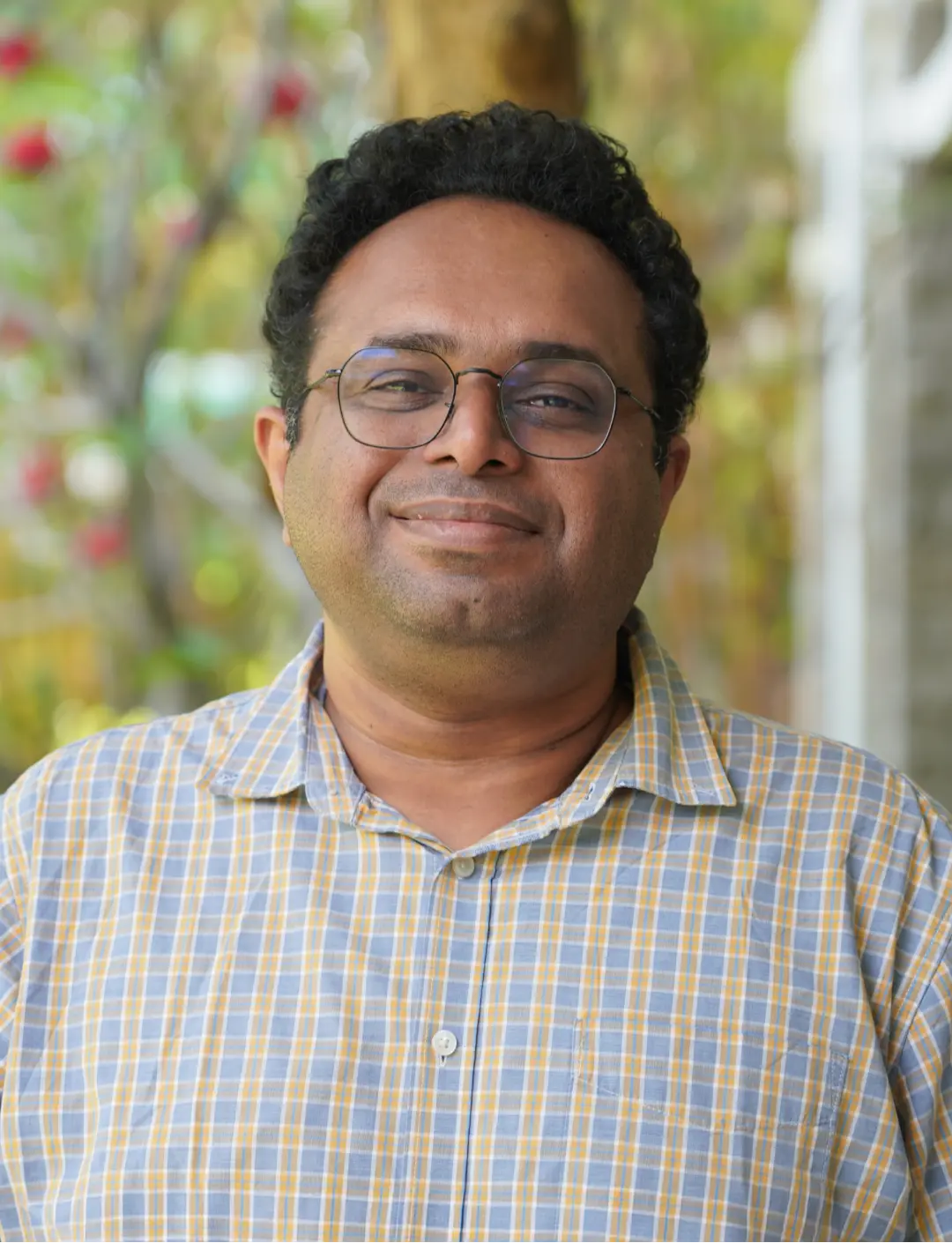
Anup Surendranath
Executive Director & Professor of Law
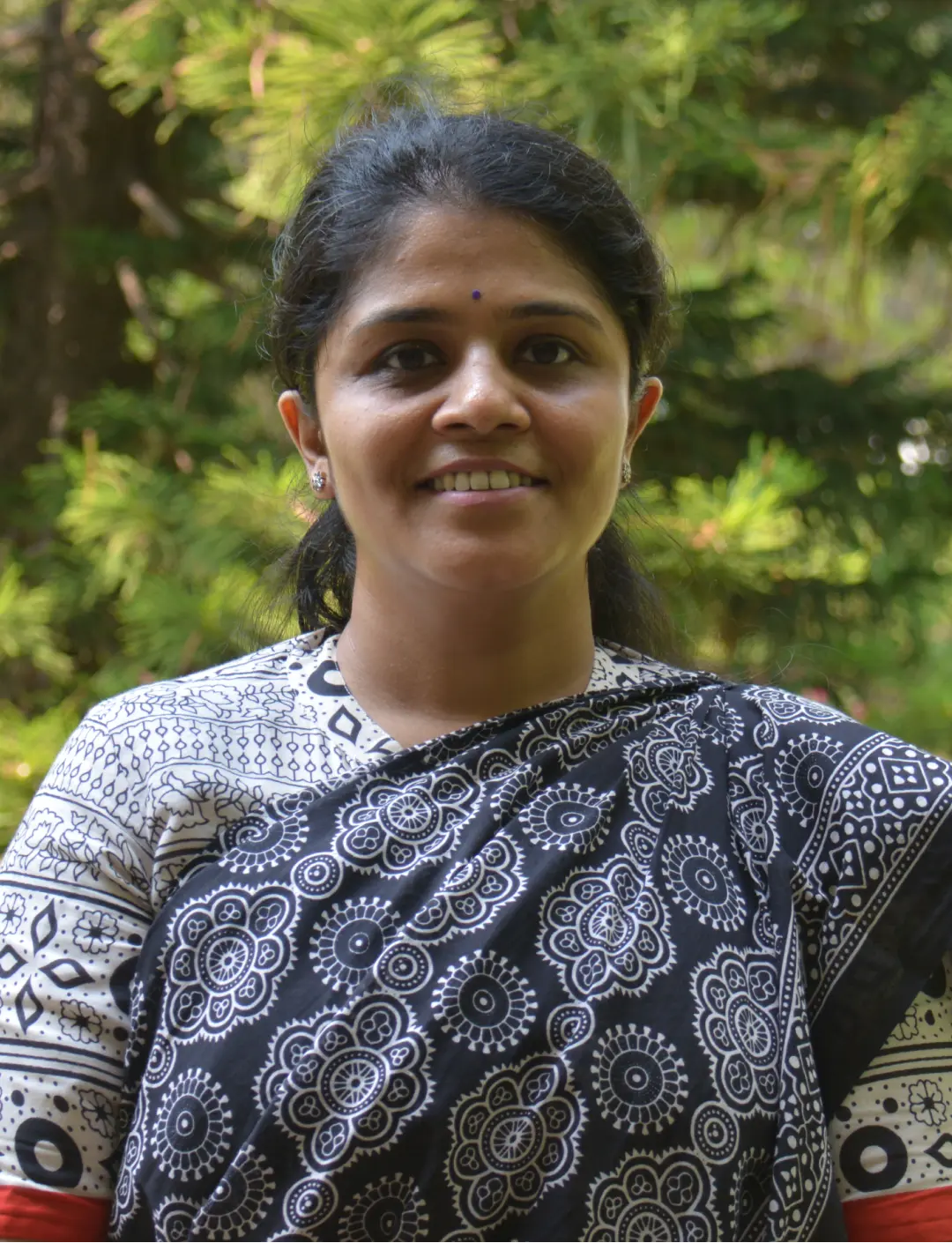
Shreya Rastogi
Director, Forensics & Litigation

Maitreyi Misra
Director, Research & Mitigation

Neetika Vishwanath
Director, Research