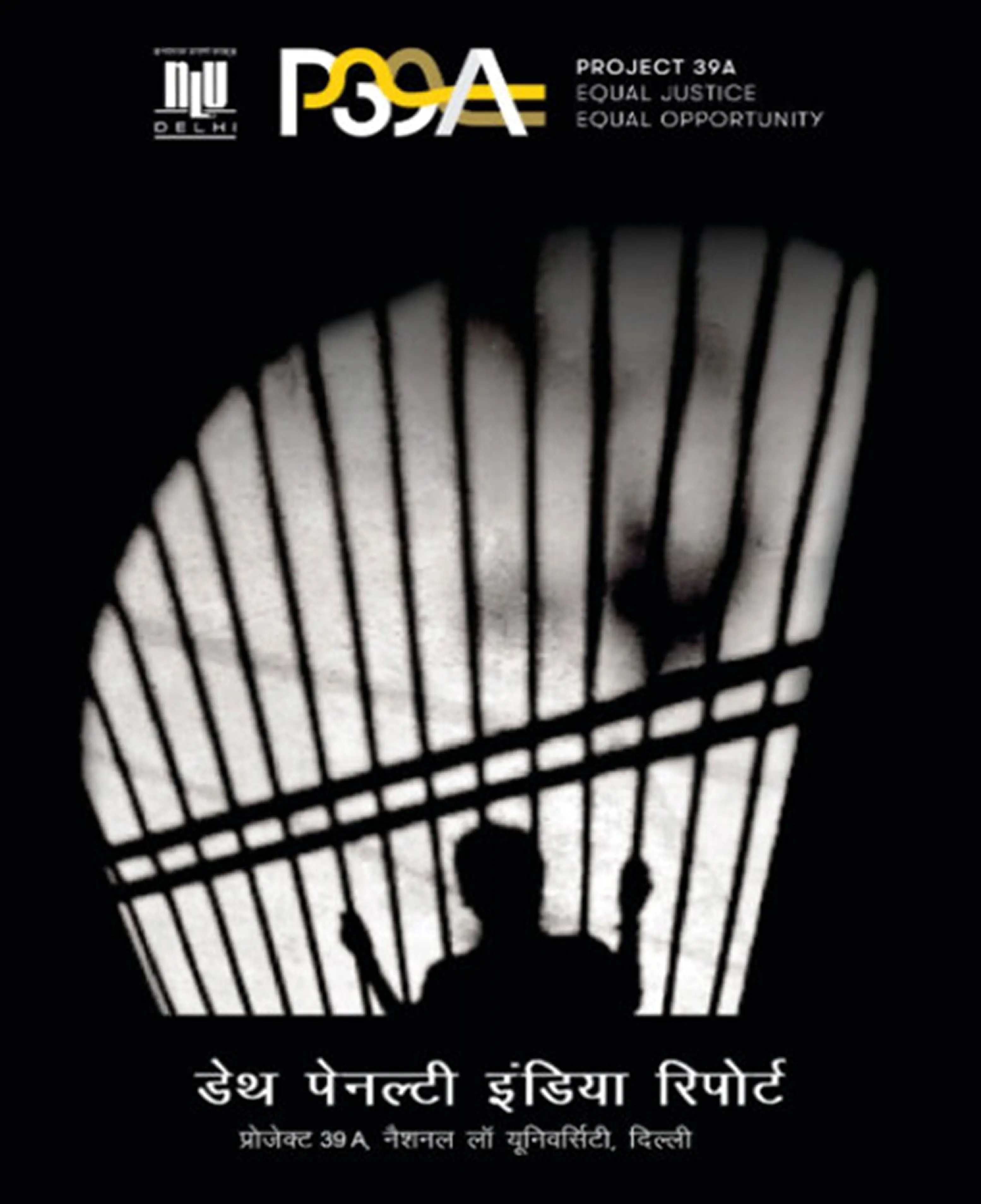
Death Penalty in India Report (in hindi)
The Death Penalty India Report by Project 39A aims to provide the first comprehensive, empirical understanding of how the death penalty operates in India by examining who is sentenced to death, how the criminal justice system functions in capital cases, and what structural factors shape these outcomes. It seeks to document the socio-economic backgrounds and lived experiences of death row prisoners and their families, analyse the quality of legal processes and representation, and highlight patterns of arbitrariness and inconsistency in sentencing. Through this, the report builds an evidence base to inform judicial reasoning, policy discussions, and broader debates on fairness, due process, and the legitimacy of capital punishment in India.
Process
This report is based on a large-scale empirical study conducted between 2013–2015, involving interviews and data collection across India. The research process included:
- Establishing the total number of prisoners sentenced to death through coordination with legal services authorities, prison departments, RTI applications, and court records.
- Obtaining permissions from multiple state governments to conduct prison visits, with varying levels of cooperation; ultimately accessing 373 out of 385 death row prisoners.
- Using conversational, semi-structured interviews with prisoners and separate interviews with their families to document socio-economic backgrounds, legal experiences, and life histories.
- Developing questionnaires through consultations with legal and academic experts, and training researchers through orientation sessions with different stakeholders across the criminal justice system.
- Ensuring informed consent, anonymity, and confidentiality by anonymising identities and limiting identifying details in the report.
- Systematically coding field notes, converting qualitative and quantitative data into analysable formats, and using statistical tools and thematic coding to identify patterns.
Insights
Datta was only 20 years old when he was arrested for the rape and murder of a minor girl. Datta had never attended school in his childhood, and in fact nobody from his family had ever gone to school. His family belonged to a Scheduled Tribe, and Datta had moved out of his village to work as a daily wage labourer on somebody else’s land to contribute to the meager family income. Currently, Datta is the youngest prisoner in the barrack he shares with older prisoners, as there are no separate barracks for young adults. Datta spends his time in prison studying and working, going to school at eight in the morning each day and returning to his barrack in the evening. Datta is very proud of the fact that he has learnt so much in prison—he has learnt to read and write in Hindi, and stated with immense satisfaction that he is able to write his name. He has now filled the form to enroll in the fifth standard.