Death Penalty Sentencing in Trial Courts: Delhi, Madhya Pradesh and Maharashtra (2000-2015) contains findings from a study of all capital cases decided by trial courts of Delhi, Madhya Pradesh and Maharashtra between 2000 and 2015. Analysing 215 judgments (43 from Delhi, 82 from Madhya Pradesh, and 90 from Maharashtra), the report exposes the hollowness of sentencing hearings that are conducted. Combining empirical analysis and doctrinal critique, substantial parts of the report are also dedicated to demonstrating the normative and procedural gaps in death penalty sentencing framework that have been the legacy of the Bachan Singh judgment and the numerous inconsistencies in Supreme Court judgments in the 40 years thereafter
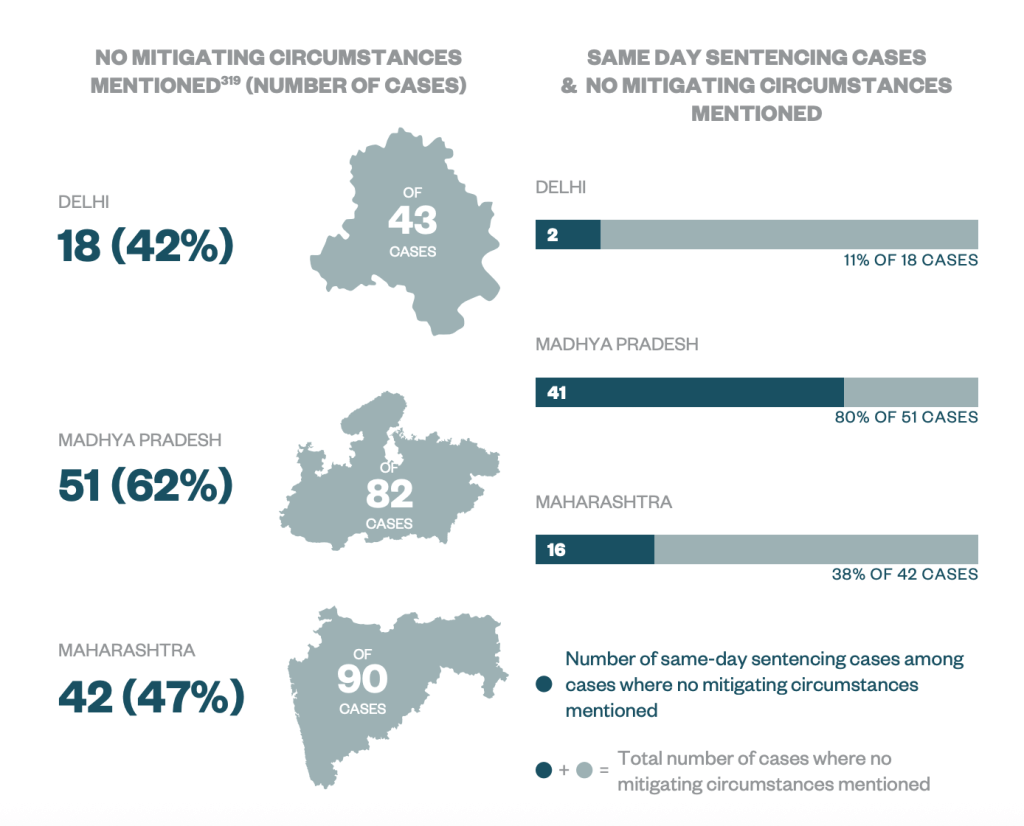
Contrary to the Constitution Bench decision in Bachan Singh (1980) which emphasised the relevance of mitigating factors in capital sentencing, trial courts heavily relied only on aggravating circumstances of the crime to decide the outcome. In 51% of the 215 trial court judgments, mitigating circumstances were not considered. Further, in complete defiance of the spirit of individualised justice envisaged in s.235(2) CrPC, 44% cases involved sentencing on the same day as conviction. In addition, the trials courts did not consider the default punishment of life imprisonment in 73% cases while deciding between life imprisonment and the death sentence. It would, however, be incorrect to attribute complete blame for a broken state of capital sentencing in trial courts exclusively to these courts themselves.

 The Square Circle Clinic, NALSAR